Sofiya
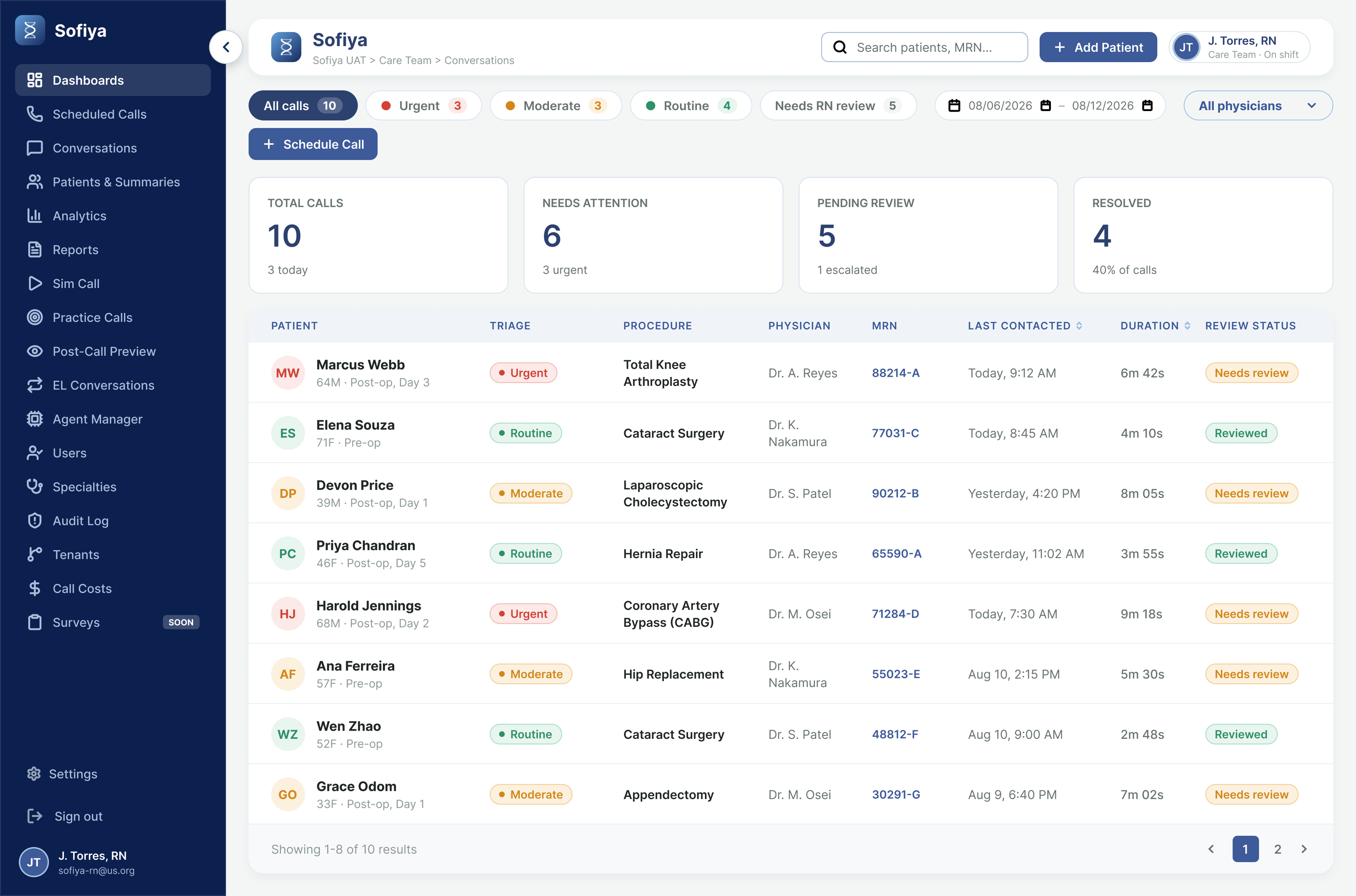
A voice AI that calls patients before and after surgery. I'm the only designer at Vintage Labs AI, and I redesigned the dashboard nurses use to review those calls.
Live since October 2026. The redesign is rolling out now.
Every screen here uses placeholder or test data. The real product shows patient details, so those screens stay private.
The pilot ran in one cardiac lab at a well-known hospital chain. It worked, and more departments wanted in.
But the dashboard couldn't tell a nurse who to call first. Every row just said Pending, and most nurses in the new departments would be using Sofiya for the first time.
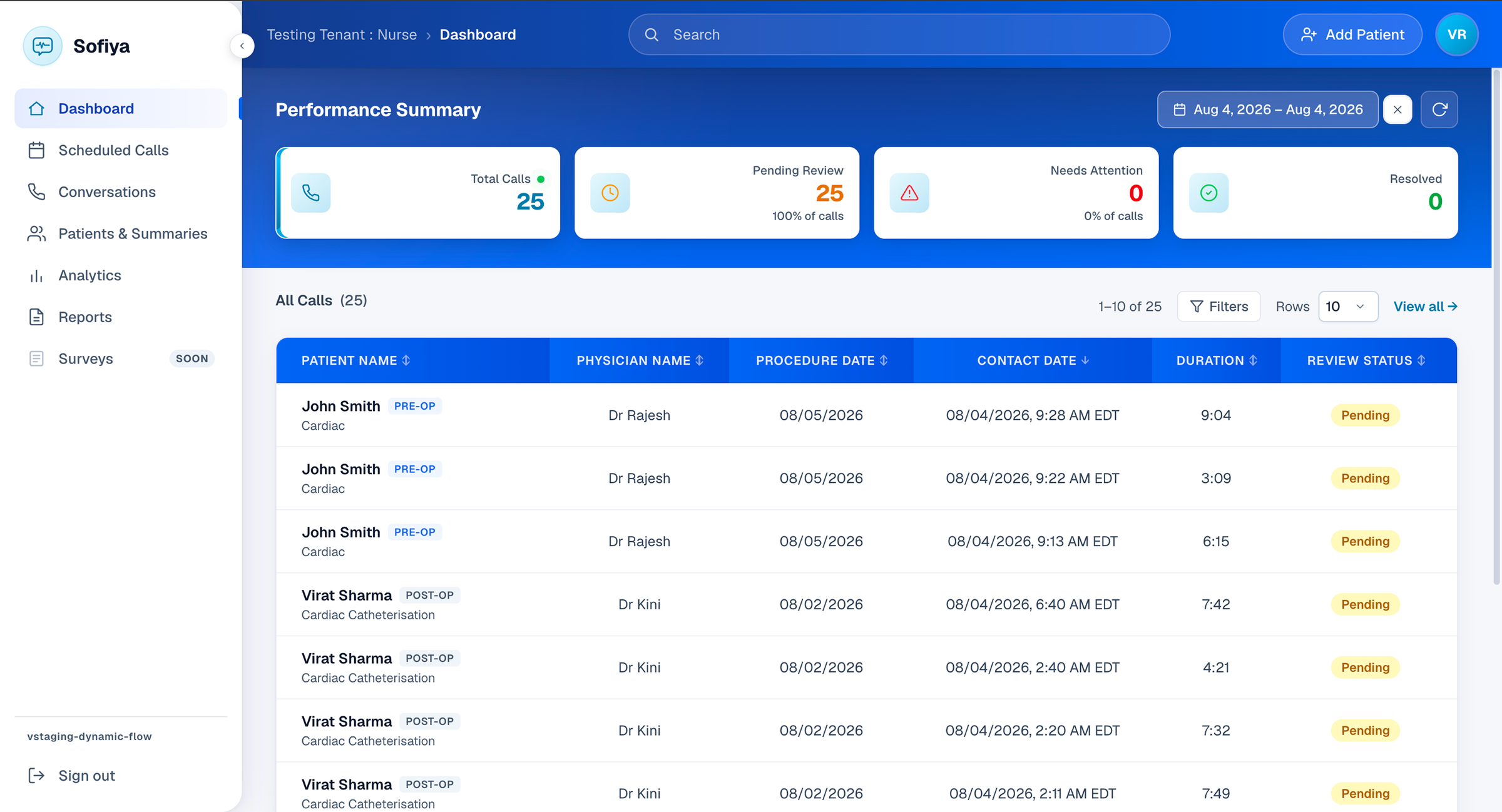
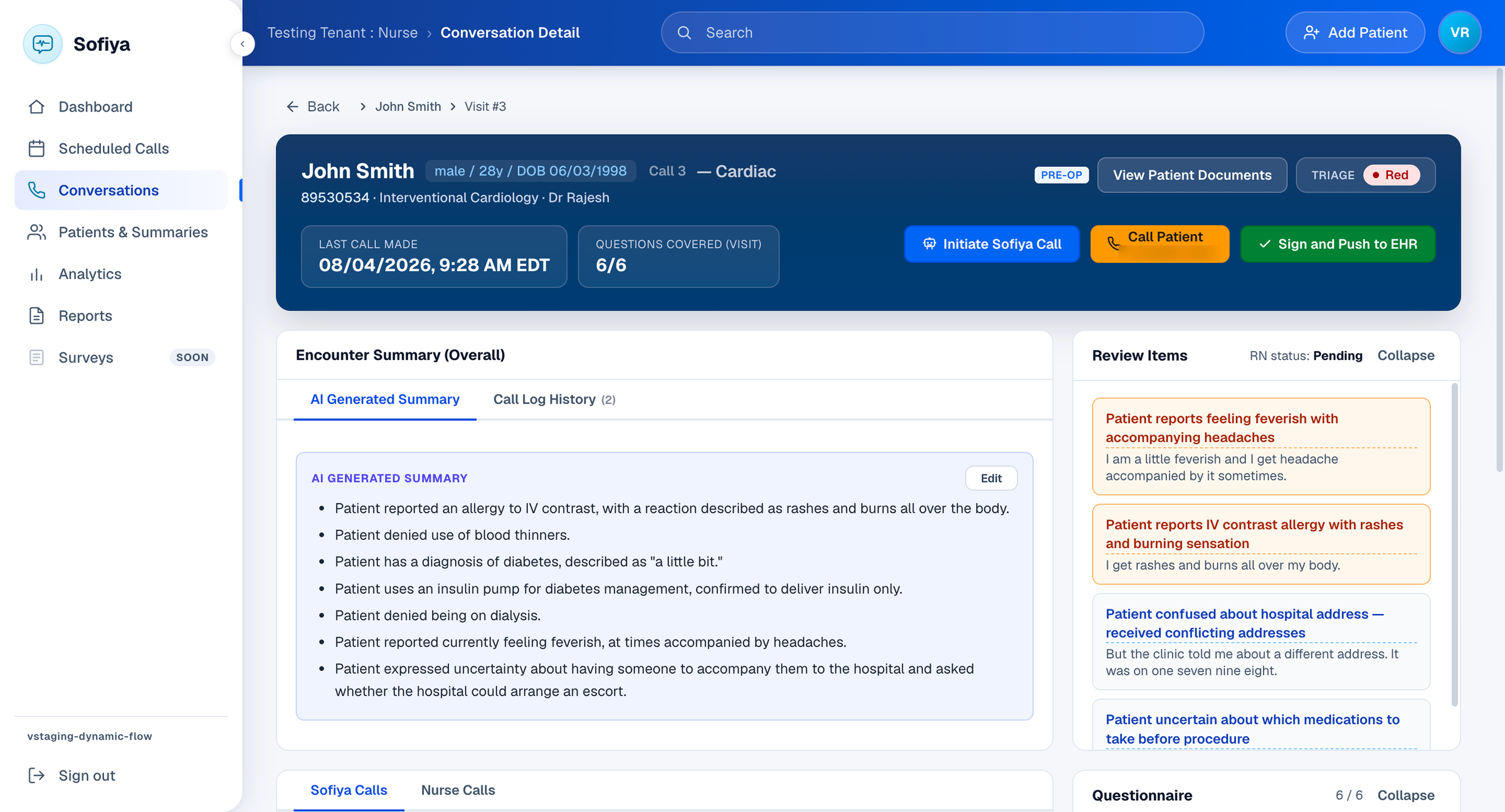
Before: the pilot dashboard and call page, from the staging build with test data.
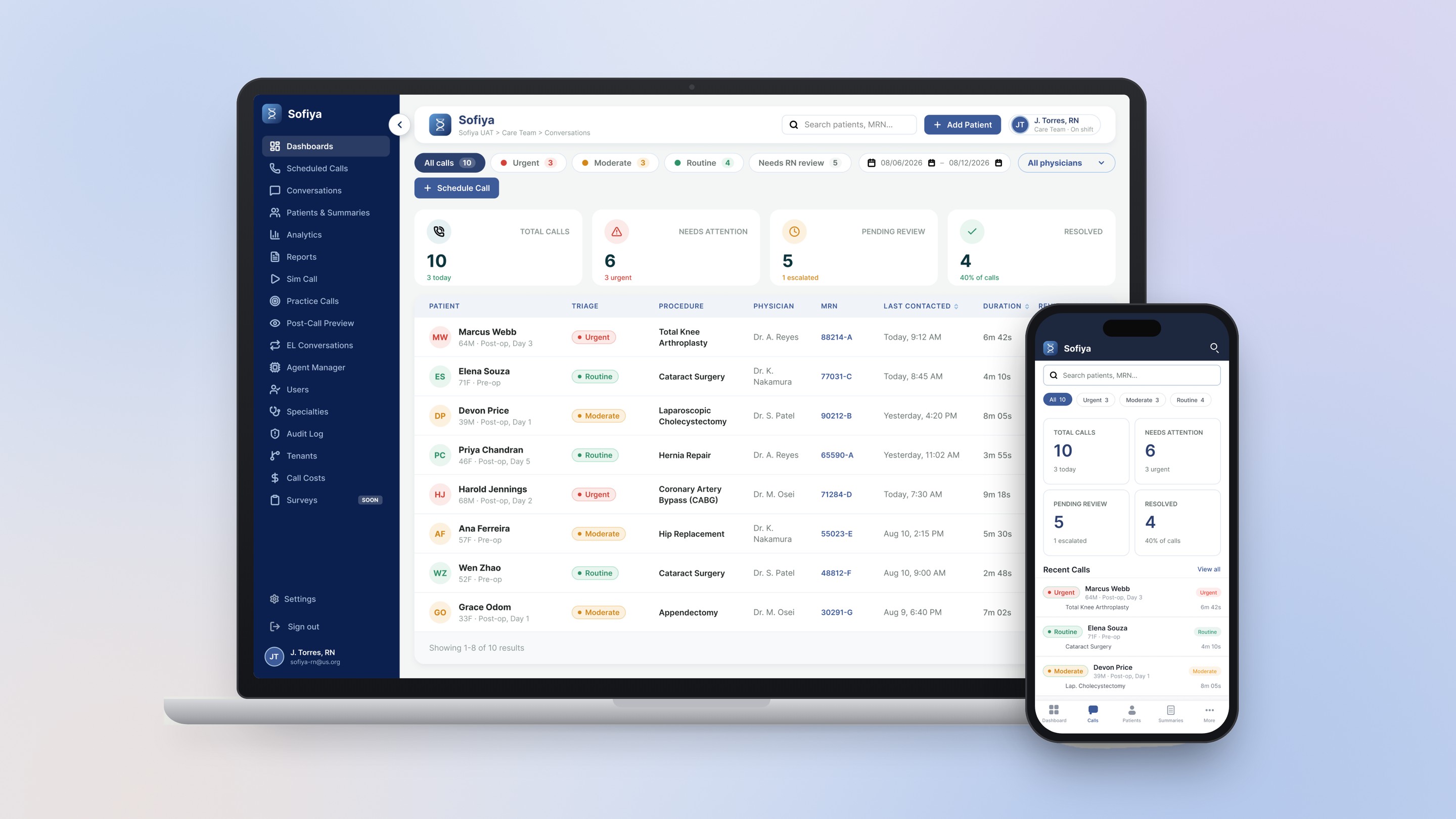
So I put urgency first. Triage chips filter the dashboard in one tap.
Each call now opens with a two-line risk summary, and any question Sofiya missed is flagged.
The AI can get things wrong, so the nurse always edits and signs off before anything goes into the patient's record.
Before engineering started, I built a clickable prototype so the team could try the new flow and give feedback early.
Trade-offs
Sorting by risk means calls no longer show in the order they came in, but nurses new to Sofiya know who to call on day one. Having the nurse sign off adds a step to every call, which is worth it when one wrong AI summary in a patient's record could cost a hospital's trust. Rebuilding the design system first held up new screens for a while, but with four hospitals, patching would have meant repeating every fix screen by screen.
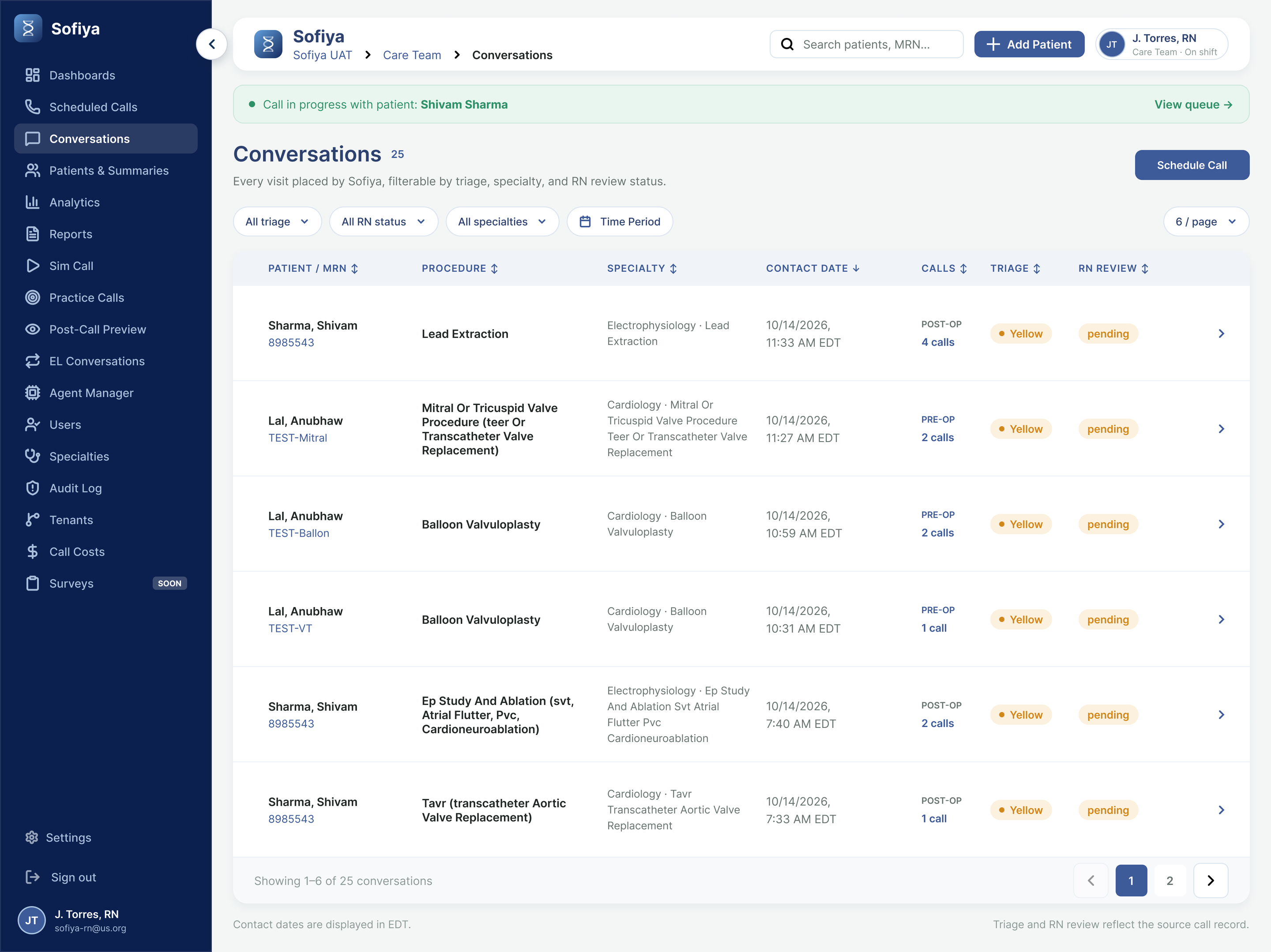
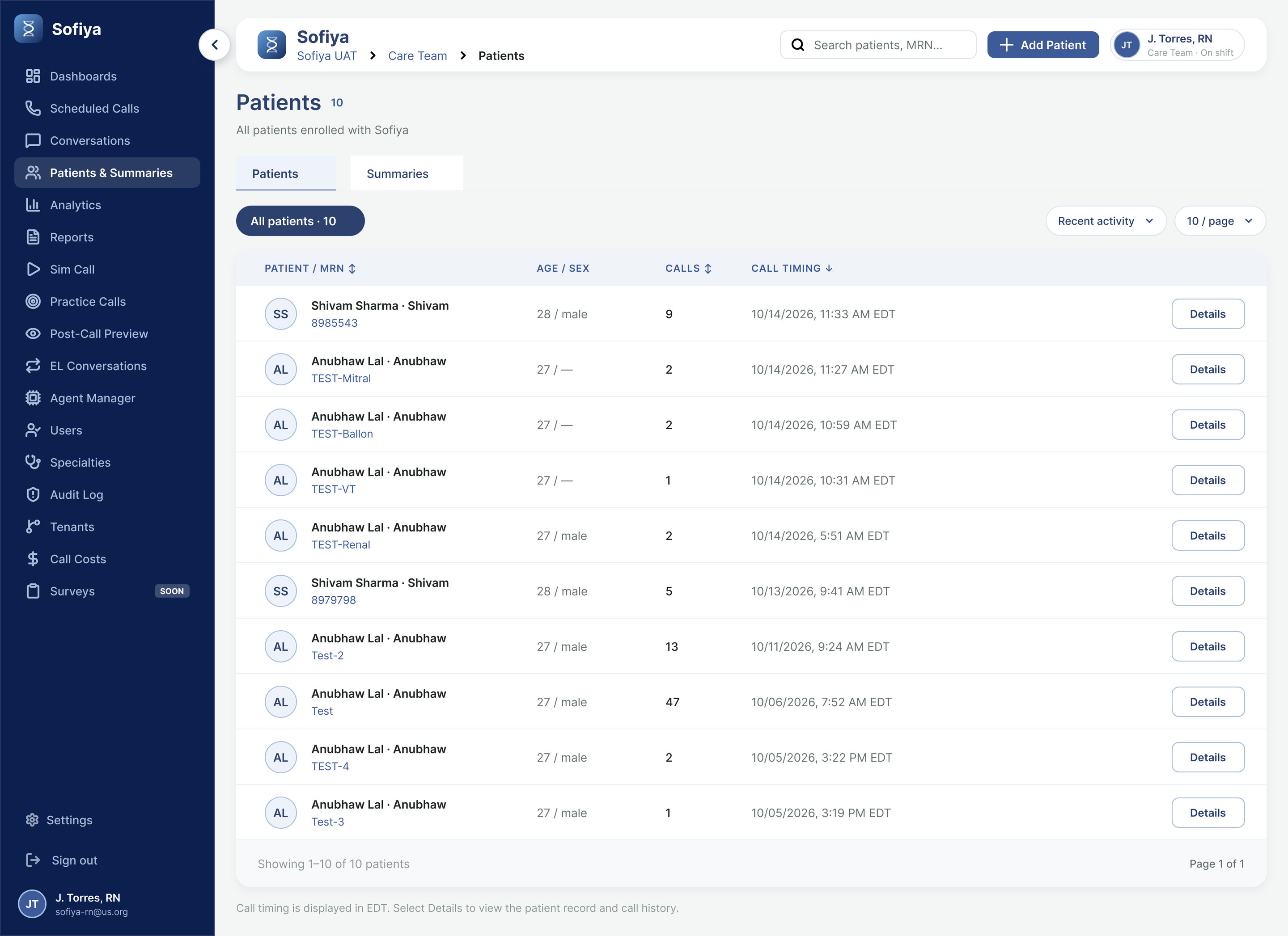
Conversations, and Patients & Summaries.
Nurses aren't always at a desk, so I designed a mobile version too.
It all runs on a design system I rebuilt in Figma with Claude Code.
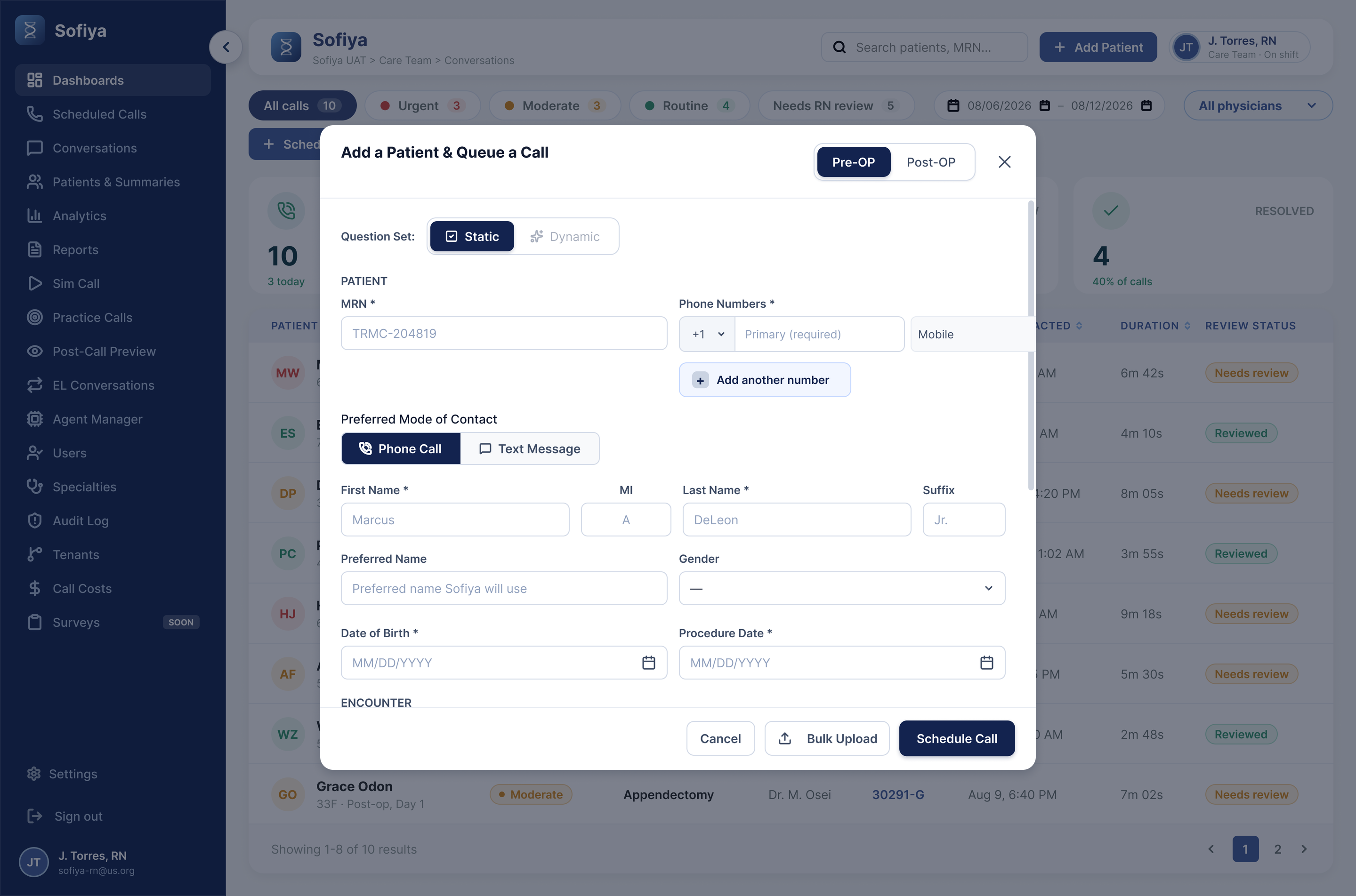
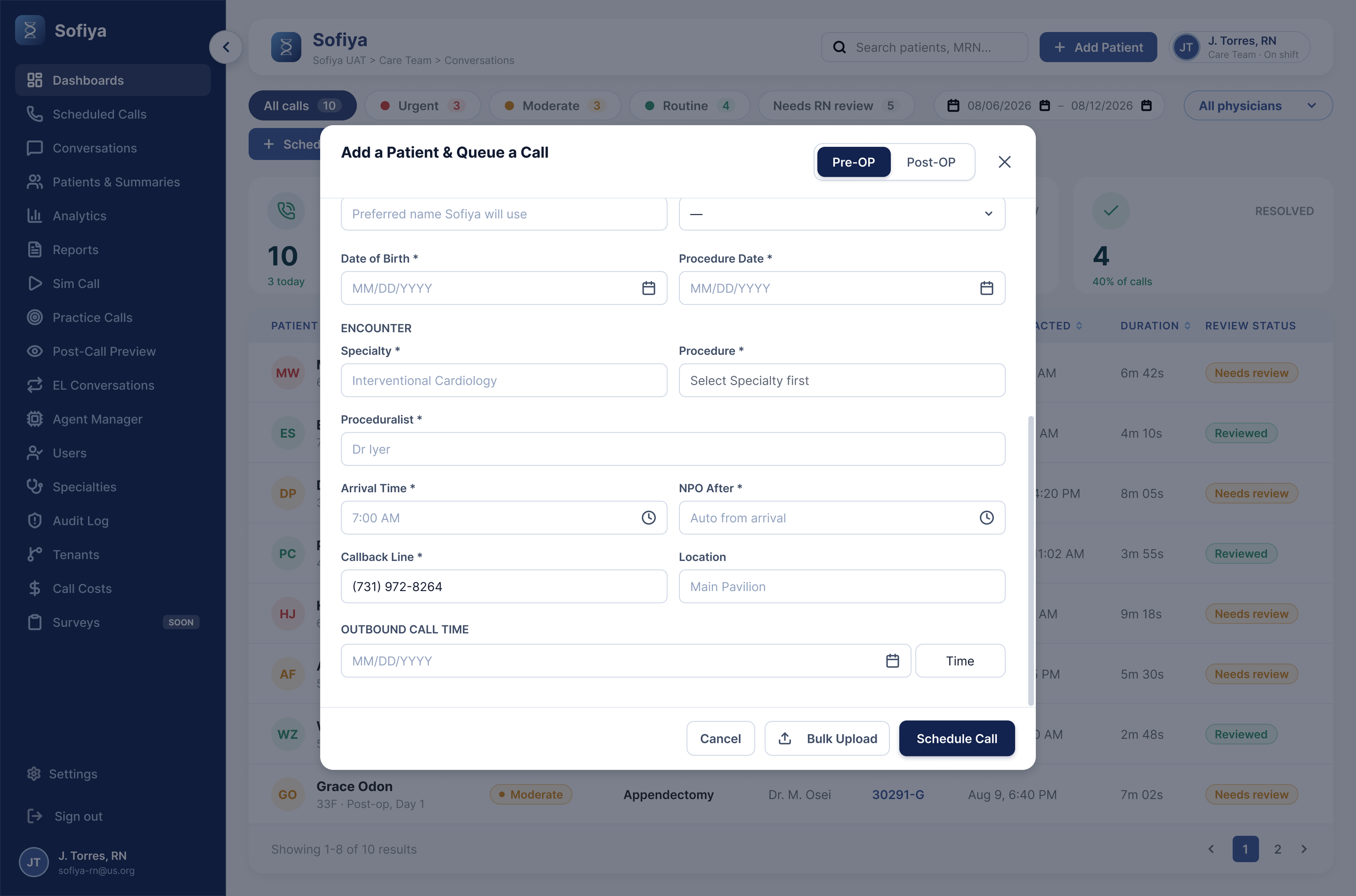
Add a patient and queue the call in one step.
Sofiya went live in October 2026. After the first hospital, three more joined as tenants, so it grew from one hospital to four.
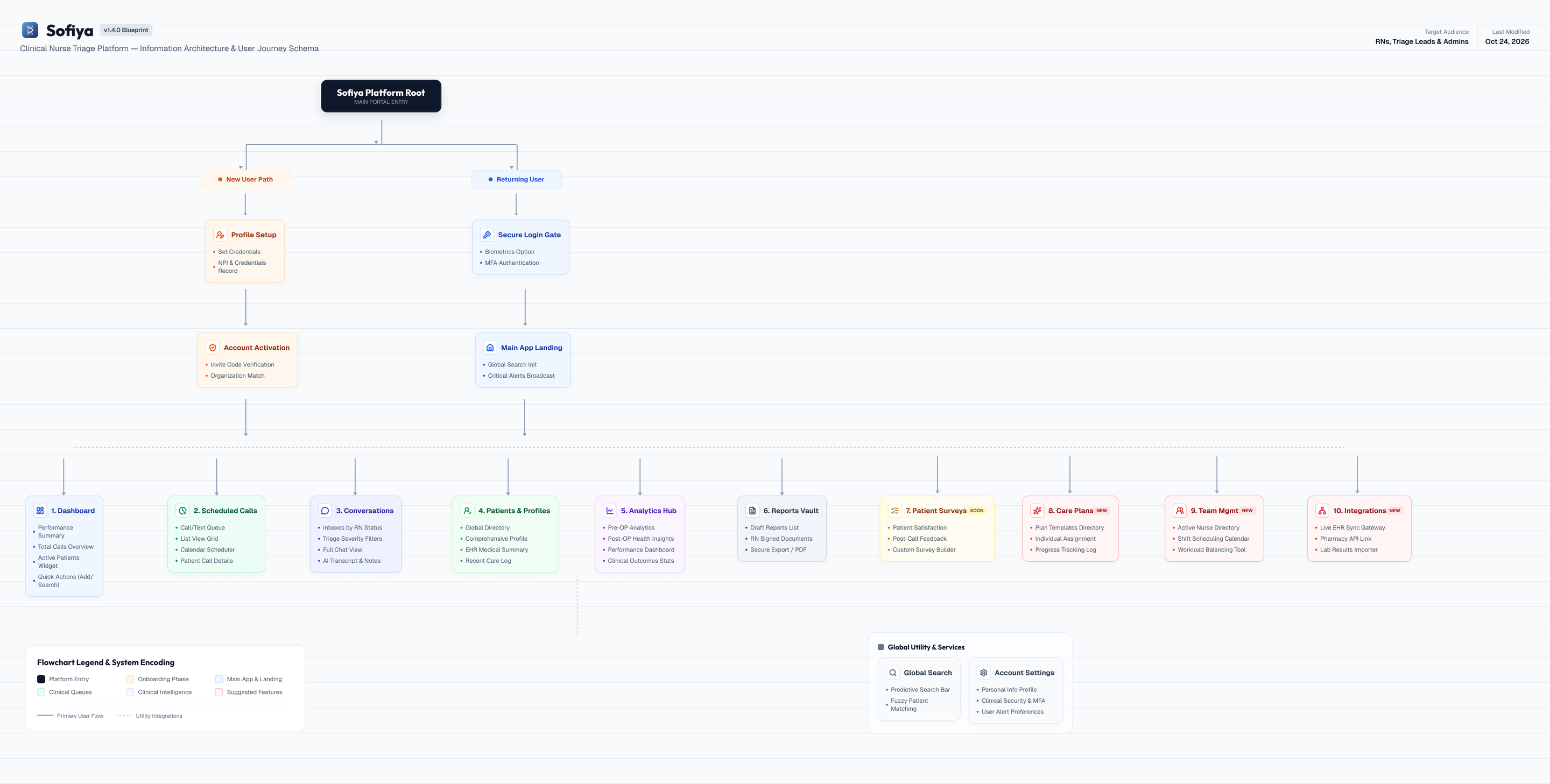
With the rebuilt design system, one change carries across every screen, and handoff to engineering got about 30% smoother. I also mapped ten product areas, three of them new, for what comes next.
 Try it yourself
Click through the desktop and mobile screens.
Open the prototype
(opens in a new tab)